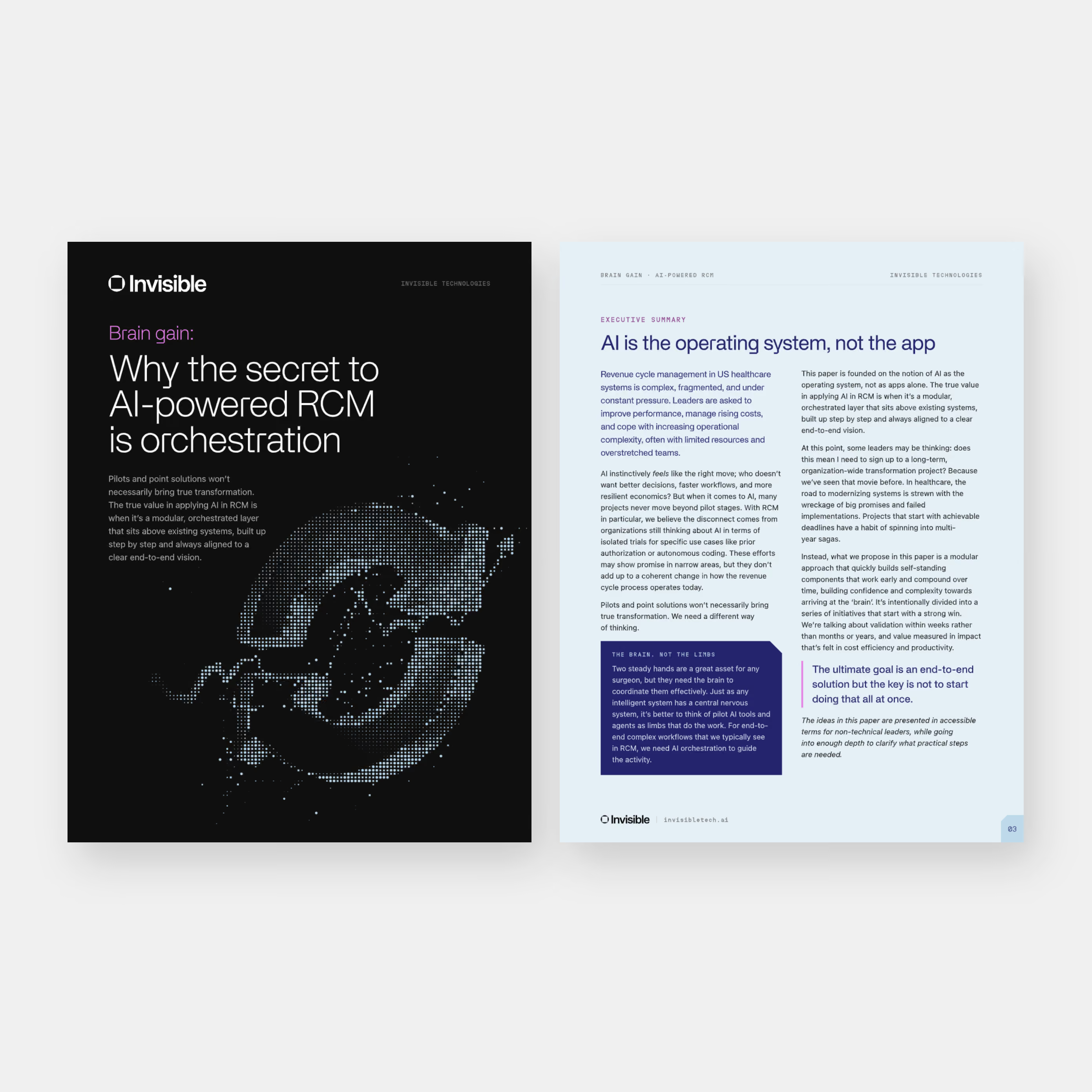
The true value in applying AI in RCM is when it’s a modular, orchestrated layer that sits above existing systems, built up step by step and always aligned to a clear end-to-end vision.
Executive summary
A practical path to implementing AI in healthcare systems
1. Start small, think big
A more realistic approach is to treat the early stage like a controlled experiment rather than a full-scale transformation. Think of it like testing a treatment in a scientific environment before moving to clinical trials on real patients. Begin in a ‘test tube’, where conditions are simpler and easier to manage.
2. What this means for leaders
Thinking in terms of compounding pushes leaders beyond the mindset of ‘one successful AI pilot’. It encourages them to ask how each use case will connect to the next, and how the overall journey from encounter to claim can be redesigned so that each improvement amplifies the others.
3. The AI operating system
It helps to think of AI as an operating system that sits as an intelligent layer above existing tools and systems. Rather than replacing every underlying application, this isn’t something that appears all at once. It’s built up over time through a series of modules, each corresponding to a use case or a set of related capabilities.
4. The journey to unified data and intelligence
A central challenge is that data is dispersed across many systems. A key first step is to unify the data. This doesn’t necessarily mean physically moving everything into a single database, but it does mean being able to see and work with the data as a coherent whole for the purposes of AI and orchestration.
5. Mindset, impact, and the platform model
A platform helps mitigate risks and ensures that as new modules are added, they sit on a stable, shared foundation.
If this describes you, let’s talk.
We build custom AI for healthcare operations, automating coding, financial clearance, AR prioritization, and denial defense across every facility. The result is faster cash collection, lower denial rates, and fewer AR days.
The true value in applying AI in RCM is when it’s a modular, orchestrated layer that sits above existing systems, built up step by step and always aligned to a clear end-to-end vision.