Most pharma sales enablement investments produce the same outcome: better-organized content and more data for managers to review. What they don't produce is a field team that engages more effectively with HCPs. That gap is at the center of life sciences commercial operations, and it's structural. AI is the first technology to address it at the level where it actually matters: the individual conversation between a rep and the healthcare professional across from them.
Traditional sales enablement platforms handle content management and activity tracking. Your reps can locate the right sales content, log the interaction in the CRM, and move on. What those tools can't do is tell a rep why this particular HCP hasn't changed their prescribing behavior despite multiple visits, or which data point is most likely to shift the conversation today. That's not an adoption failure — it's a ceiling built into the product. The pharmaceutical sector runs on specific intelligence: HCP-level context, patient population data, payer dynamics, market access constraints, and a compliance framework that governs what reps can say and how. General-purpose sales enablement platforms were designed for enterprise sales organizations, not for the pharmaceutical industry's operating environment.
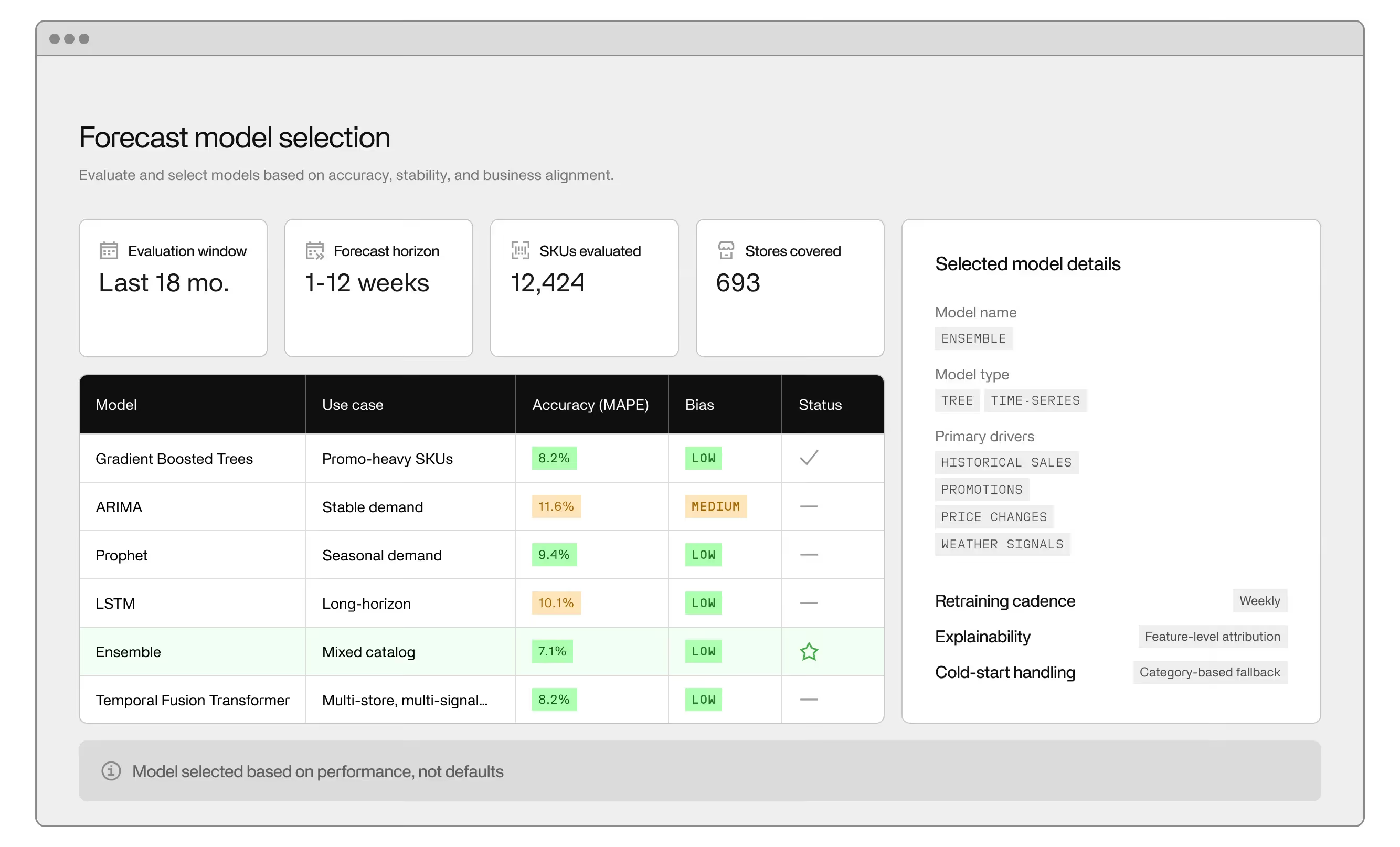
AI-powered field enablement changes what's available to your reps before, during, and after each HCP interaction. Before the call, the rep receives a briefing built from prescribing data, prior engagement history, and current market access status, not a generic profile pulled from a CRM. That's the difference between a rep who knows product knowledge and one who understands why this healthcare professional is likely to care about it now. After the call, AI captures what happened and feeds outcome data back into the system so the next interaction with that HCP starts from a better position. Sales and marketing teams get a feedback loop that actually closes: between what's communicated in the field and what sales content and strategy get adjusted in response.
Regulatory compliance is one of the most consequential constraints in the pharmaceutical sector, and it's where generic platforms create the most friction. Sales materials have to clear MLR review before they reach your reps' hands. It's the same workflow friction that AI for pharma regulatory and medical content addresses upstream in the content cycle. AI compresses that cycle by generating content structured for compliance from the first draft, surfacing compliance risks before they reach the review queue. Sales and marketing teams gain the ability to move at the pace of market trends rather than the pace of a manual review process.
The result isn't fewer guardrails. It's guardrails that operate at the speed of the pharmaceutical industry instead of slowing it down.
The clinical knowledge gap in pharma field teams isn't a training problem. It's a feedback loop problem, and one dimension of the clinical-to-commercial gap that costs commercial teams ground on every call cycle. Pharmaceutical sales reps are expected to stay current on a continuously evolving label, new clinical trial data, and shifting conversations with healthcare professionals, and to translate it accurately on every call. Continuous training addresses this in principle, but most programs deliver content on a schedule disconnected from what reps actually encounter.
AI changes the feedback loop: when skill gaps surface through objection handling patterns, call outcomes, or engagement data, those signals feed directly into what training content gets served and when. A rep who struggled on specific clinical questions gets targeted reinforcement, not a general refresh scheduled for next quarter.
Improving how your field teams engage HCPs isn't primarily a training problem. It's a data problem. Healthcare providers respond differently to reps who arrive with relevant context than to reps who arrive with a standardized deck. Predictive analytics on HCP engagement patterns tell you which value propositions land by specialty, which topics generate follow-up, and which parts of your sales enablement platform are driving call outcomes. That turns quota attainment from a field-by-field variable into something you can systematically influence. Virtual meetings extend this further: AI can support real-time guidance in digital interactions in a way that's operationally impossible in a physical call.
Not every sales enablement platform built for enterprise sales works in the pharmaceutical sector. The platforms that function in life sciences are built around the industry's compliance architecture, not retrofitted to accommodate it after the fact. Seismic is widely deployed in pharma commercial organizations and offers guided selling and content management designed with regulatory compliance in mind. When evaluating sales enablement tools for your organization, start with two infrastructure questions: does the platform integrate with your existing CRM systems, and does it support the MLR workflow natively? From there, the distinction that matters is whether it surfaces intelligence at the HCP level rather than territory-level aggregates, and whether it generates actionable analytics or just activity logs. A platform that tracks field activity without informing the reps using it is a reporting tool, not a field enablement tool.
When field teams are operating on generic briefings and static content, the problem is structural. Get started with Invisible.
AI uses prescribing patterns, prior engagement history, and specialty context to generate call-specific briefings that tell reps what to prioritize and why for each HCP. Rather than standardizing the approach across the territory, it makes each interaction more relevant to the specific healthcare professional the rep is meeting, which translates directly into better conversations and measurable follow-through.
A standard platform tracks activity; an AI-powered sales enablement platform uses that activity to inform the next interaction. The distinction is that AI synthesizes data across multiple sources to generate actionable guidance at the HCP level, rather than surfacing records for the rep to interpret. In the pharmaceutical sector, that difference compresses preparation time and makes each call more relevant.
AI reduces compliance risks by generating sales materials structured for MLR review from the first draft — flagging regulatory issues before content reaches the approval queue. Your reps get compliant, current content faster, and the review cycle spends less time on revisions. This matters most when a recent label update or clinical trial data has changed what can be communicated.
Prioritize platforms built for life sciences compliance, not adapted to it. The critical integration points are data connectivity, MLR workflow support, and HCP-level analytics rather than territory-level aggregates. The right question is whether the platform improves what reps know before a call, not just what managers see afterward. If it isn't informing field conversations, it's a reporting tool.
Traditional continuous training delivers content on a fixed schedule regardless of what reps encounter in the field. AI-driven training adapts to actual performance signals: objection handling patterns, call outcomes, and skill gaps identified through engagement data. The reinforcement reps receive addresses where knowledge is weakest, not a general refresh tied to a quarterly calendar.
Yes. When predictive analytics on HCP engagement are applied at scale, surfacing which value propositions perform by specialty, which content drives follow-up, and which therapeutic areas are seeing shifts in prescribing activity, commercial teams can make targeted adjustments instead of waiting on quarterly reviews. The result is commercial intelligence driving performance, not just individual rep effort.
In digital interactions, AI provides real-time guidance that's impossible in person: surfacing relevant domain context and supporting in-call decision-making as the conversation develops, not just in the pre-call briefing. For pharmaceutical companies expanding remote engagement, this is the highest-value capability in a modern sales enablement platform, and where the gap between AI-powered tools and legacy systems is most pronounced.