Five enterprise AI myths have outlived every proof of concept and every deployment success that should have buried them. They thrive in the space between the AI hype cycle and real implementation, circulating in boardrooms and budget reviews dressed up in the language of caution and due diligence. They are not harmless. Each one costs enterprises time, money, organizational momentum, and competitive position. What follows is the record, corrected.
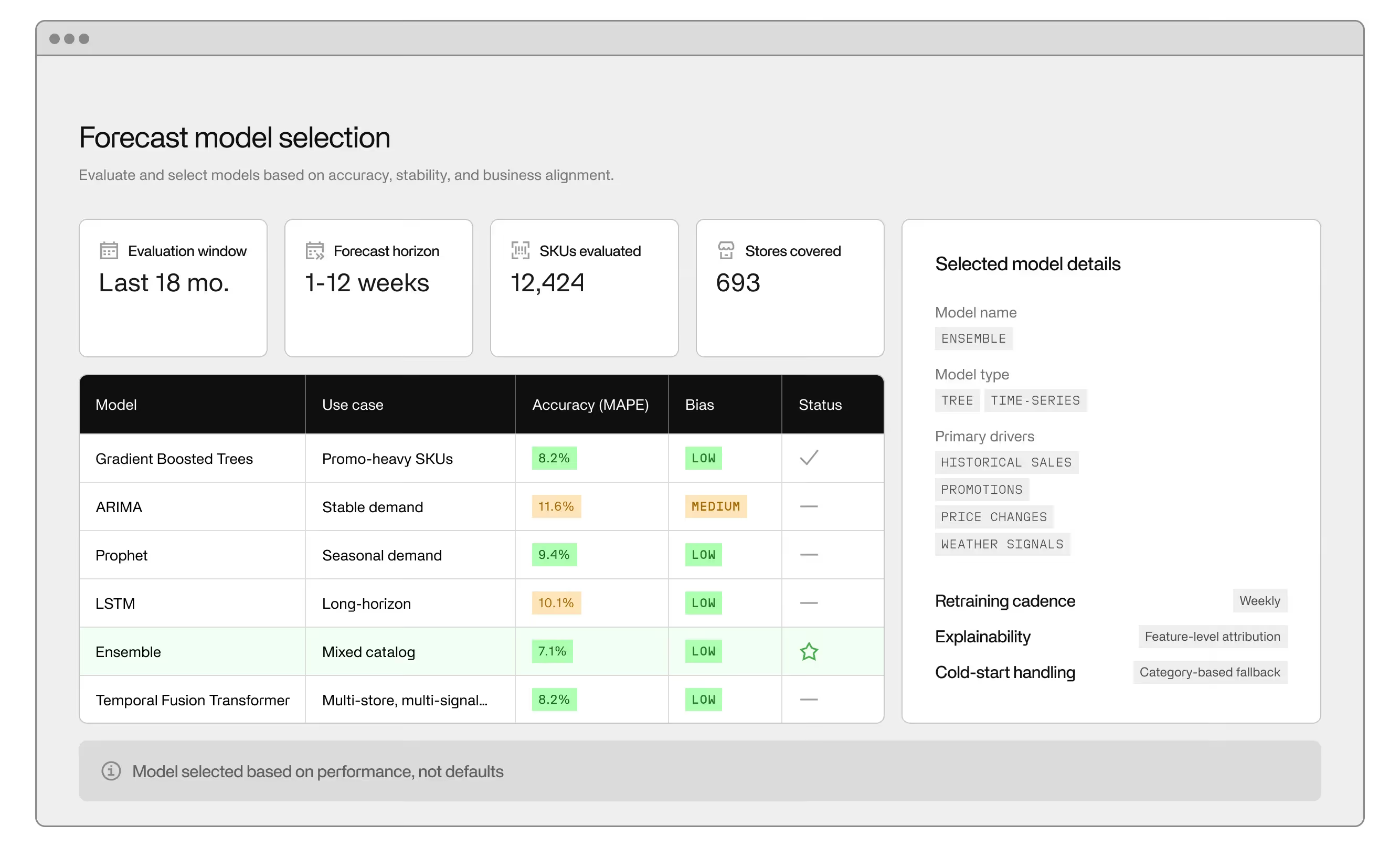
Enterprise AI is not generative AI. It is a broad category of production systems that includes intelligent automation, AI agents, forecasting models, computer vision pipelines, and LLMs, each built for a different class of problem.
The conflation happened fast. ChatGPT went from research preview to board agenda item in a matter of months, and suddenly ‘AI’ meant gen AI, which meant chatbots, and the question enterprises were asking was whether to build a ChatGPT wrapper. That framing misses most of what enterprise AI actually does.
Gen AI, including large language models and agentic AI systems, is one slice of a much larger technology stack. Machine learning systems ranging from deep learning to natural language processing have been running in production at serious enterprises for years: processing unstructured data, routing workflows, scoring decisions, and flagging anomalies at volumes no human team could match. When enterprise leaders evaluate AI readiness through the narrow lens of generative AI, they misidentify their own capabilities and overlook the deployment patterns that actually fit their operations.
Agentic AI systems deserve specific attention here. AI agents are systems that can reason through complex goals and execute multi-step tasks, representing a different class of capability from a chatbot. Treating them as interchangeable with a generative AI interface is a category error that leads to bad architectural decisions before a line of code is written.
The question for enterprise leaders is which class of AI system solves the operational problem they have. Answering it accurately requires a vocabulary that distinguishes between them.
AI displaces tasks, not roles wholesale. The enterprises capturing the most value from AI adoption are the ones upskilling their people alongside their systems, not downsizing toward a fully automated org chart.
This myth has circulated since before the current wave of enterprise AI, picking up energy every time a new capability lands. It misunderstands how automation has worked every time it has disrupted work before. The pattern is consistent: automation eliminates the most repetitive, lowest-judgment tasks from a role, and the people who held those roles shift toward higher-judgment work. Productivity goes up. Headcount changes happen through attrition and role evolution, not wholesale elimination.
That dynamic is playing out now. Enterprises that are honest about their digital transformation will tell you that AI has changed what their operations teams do more than how many people are on them. The work has shifted toward prompt engineering, workflow design, quality review, and exception handling: skills that sit alongside the AI system rather than competing with it.
Human oversight is not a legacy cost to be minimized. It is a production requirement for any AI deployment operating in a regulated or high-stakes environment. Enterprises with strong human-in-the-loop frameworks are the ones scaling AI without compounding errors.
The real workforce risk is that enterprises failing to upskill their teams find themselves unable to operate the systems they deploy, or that their people migrate to organizations that invest in them.
Waiting for clean, perfectly structured data before deploying AI is the surest path to falling two years behind your competitors. Data quality improves in production, not in preparation.
This myth is particularly sticky because it sounds like responsible governance. Enterprises convince themselves they are being rigorous by not deploying until the data house is in order. What they are actually doing is optimizing a prerequisite that has no terminal state.
Production-grade enterprise AI runs effectively on real-world data. It requires enough to establish a baseline, and then it generates feedback signals that tell you exactly which data quality issues matter most for the decisions the system is making. You learn more about your data quality problems by running AI on imperfect data than by attempting to fix everything before a deployment that never happens.
Unstructured data is part of this. Enterprises that believe AI requires structured, warehouse-ready data leave their richest signal sources untapped: emails, call recordings, documents, and case notes. These often contain the most operationally significant patterns, and modern AI systems are built to process them.
The technical staffing conversation often becomes a reason to stall while waiting for resources that are scarce across the hiring market. The more productive framing starts by identifying the highest-value use case and assessing what data actually exists for it, then deploying with iteration built in. The data quality work happens in parallel, informed by what production actually needs.
The black box problem is substantially solved for production enterprise AI. Modern deployments include explainability layers and audit trails built into the architecture as standard requirements, with escalation paths to human review configured for each risk tier, not added on afterward.
This myth had genuine teeth in the early years of deep learning, when neural networks produced outputs that were difficult to interrogate. That era is not the current one. AI governance has matured into a practical engineering discipline with tooling to match. The AI systems being deployed in enterprises today can tell you why they made a decision, flag low-confidence outputs, surface the features that drove a prediction, and route edge cases to human review. Hallucinations in generative AI outputs are managed through validation layers and confidence thresholds that enterprise teams configure for their specific risk tolerance.
Explainability is a production requirement for any enterprise operating in regulated industries. The organizations that have deployed AI at scale in financial services, healthcare, insurance, and the public sector have done so because the systems are auditable. Saying that AI is ungovernable in 2026 reflects a view of the technology that is several years out of date.
Cybersecurity and data breaches are a legitimate governance concern. AI systems that process sensitive data need access controls, continuous monitoring, audit logging, and incident response procedures. These are solvable engineering problems with established solutions. The same rigorous approach you apply to any enterprise software applies here: threat modeling, access controls, logging, and human oversight of flagged events.
Trustworthy AI is not a future state. Enterprises deploying AI responsibly today are building AI governance frameworks that include model monitoring, drift detection, escalation paths, and regular audits. The black box objection, at this point, is an excuse to avoid the work of building those frameworks.
Enterprise AI implementation today requires domain expertise and operational knowledge more than it requires data scientists. The abstraction layer has moved dramatically since the era when a Python PhD was the prerequisite for every deployment.
This myth does real damage to AI adoption timelines. Operations leaders who believe they need to hire or contract a machine learning team before they can start delay deployments by six to twelve months while waiting for scarce specialists. By the time the team is in place, the use case has drifted and the organizational momentum has evaporated.
The most impactful enterprise AI deployments are designed by people who understand the workflow being automated, not by people who can implement a neural network from scratch. Domain experts who understand what a good outcome looks like, where the edge cases live, and how the system will be evaluated in practice are more valuable to a deployment than deep learning specialists who have never worked in your industry.
Machine learning infrastructure, large language model APIs, and intelligent automation platforms have abstracted the hard engineering work. The skills that matter for a successful AI implementation now include workflow design, data labeling strategy, quality assessment, and operational change management — not natural language processing research or neural network architecture.
Prompt engineering has earned its place in enterprise AI precisely because it requires domain knowledge more than computer science training. An experienced customer service manager who understands the nuances of complaint resolution is better positioned to design a gen AI-assisted workflow than a data scientist who has never handled an escalation.
AI strategy requires systems thinking and operational understanding. Enterprises that build their AI strategy around securing scarce AI engineering talent before they deploy will consistently fall behind those that lead with domain expertise and use specialist support where it actually matters.
These AI myths persist because they offer a form of permission: permission to wait, to study further, to defer a decision that feels risky. The AI hype surrounding each new capability makes them harder to correct, not easier. But each one carries a cost that compounds. The enterprises correcting the record and deploying now are building institutional knowledge and production infrastructure that cannot be recovered by a late rush to catch up.
Invisible builds the operational AI systems that enterprise leaders actually deploy, from intelligent automation to agentic AI workflows to training pipelines for production models. Explore our custom AI solutions or get started.
Generative AI, including large language models and gen AI systems like ChatGPT, is one category within enterprise AI. Enterprise AI also includes intelligent automation, agentic AI systems, computer vision, forecasting models, and classical machine learning. Conflating the two leads enterprises to evaluate AI through the wrong lens and miss deployment patterns that would actually fit their operations.
AI displaces specific tasks rather than entire roles. Enterprises deploying AI report that their operations teams shift toward judgment-intensive work rather than being eliminated. The real workforce risk is that organizations failing to upskill their people find themselves unable to operate the systems they deploy.
You need data sufficient to establish a baseline, not perfect data. Production AI generates feedback signals that reveal which data quality issues actually matter for the decisions the system is making — learning that cannot happen in pre-deployment preparation. Waiting for a perfect data environment before deploying consistently delays adoption without improving outcomes.
Yes. Modern enterprise AI deployments include explainability layers, audit trails, escalation paths, and human oversight checkpoints as standard production requirements. The black box problem was a genuine concern in early deep learning but has been substantially addressed by tooling designed for production AI governance and regulatory compliance.
Not as a prerequisite. Modern AI platforms have abstracted the machine learning infrastructure such that the skills most needed for a successful deployment are domain expertise and operational change management. Data scientists are valuable for specific technical problems, but enterprises that delay AI adoption while waiting to hire ML specialists consistently fall behind those that lead with operational knowledge.
Agentic AI refers to AI systems that can reason through complex goals and execute multi-step tasks with minimal human intervention, as opposed to generating text responses in a single exchange. AI agents use tools and execute decisions across multi-step workflows, surfacing exceptions to human review. Treating agentic AI as equivalent to a chatbot leads to architectural decisions that do not match the capability being deployed.