Most private equity firms don't have an AI strategy problem — they have a deployment problem. You've run the evaluations, sat through the demos, and watched portfolio companies struggle with digital transformation initiatives that produced more overhead than value. The question isn't whether artificial intelligence belongs in private equity fund operations. It's which workflows to start with, how to sequence the rollout, and how to avoid burning six months on a deployment that never closes.
This guide gives you a 90-day framework for implementing AI in private equity fund operations, built for fund operations teams at the decision stage. It starts with the workflows that pay back fastest and builds toward an AI-enabled investment lifecycle that creates measurable returns.
AI in private equity fund operations is no longer a competitive differentiator: it is an operational requirement. LP expectations for reporting frequency and analytical depth have increased substantially. Deal timelines have compressed. Regulatory and ESG disclosure requirements have expanded. Portfolio company data volumes have grown quarter over quarter. All of this has happened without proportional headcount growth in fund operations teams.
Generative AI and LLMs address this pressure directly. The workflows that consume the most analyst time (CIM analysis, due diligence document review, portfolio data consolidation, and investor reporting) are precisely the workflows where AI performs well: high-volume, semi-structured inputs, repeatable analytical patterns, outputs that a human can review and correct before they reach a GP or an LP. Agentic AI takes this further by running those workflows on a schedule without anyone initiating a prompt.
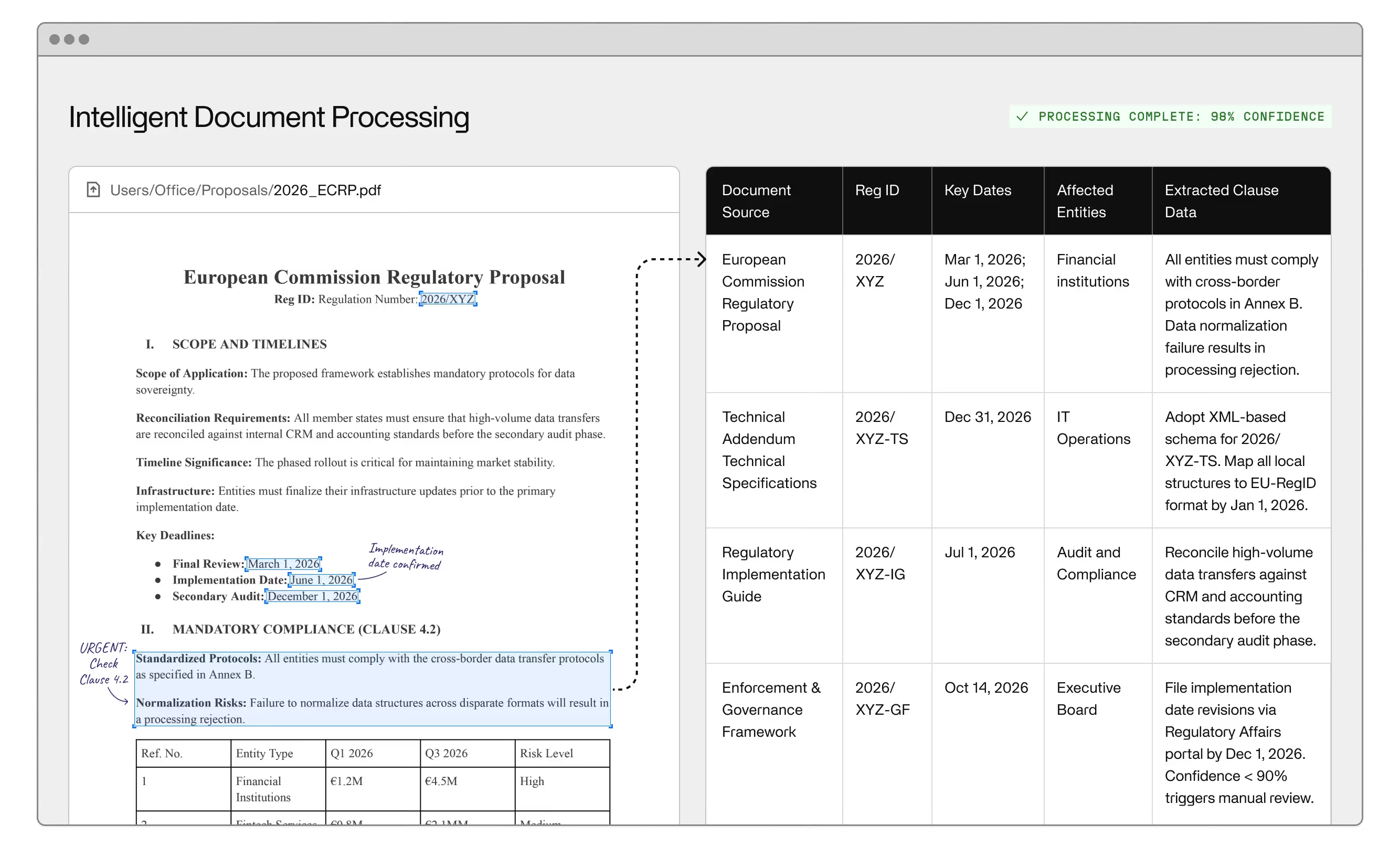
Digital transformation in private equity has been discussed for a decade. What's different now is that the tools are production-ready. GenAI processes a 120-page CIM in minutes; agentic AI runs portfolio monitoring at a weekly cadence without anyone initiating it. Investor relations teams review AI-generated LP reports rather than writing from scratch. The investment strategies that used to require 20 analysts now run with ten, when the infrastructure is built correctly.
A 90-day deployment framework for AI in private equity works because it forces you to prioritize. You're not trying to automate the entire investment lifecycle in one program. You're identifying the two or three workflows with the highest return, building the data infrastructure they require, deploying on those specific workflows, measuring the results, and then expanding. This is how you avoid the implementation debt that comes from trying to run everywhere at once.
Phase one (days 1 through 30) is foundation: auditing your data environment, selecting your deployment targets, and securing investment committee alignment on AI governance before any tool goes live. Phase two (days 31 through 60) is deployment: standing up AI on your target workflows with human-in-the-loop oversight and a defined set of success metrics. Phase three (days 61 through 90) is scale: expanding to portfolio monitoring and investor reporting automation while formalizing the governance structures that carry the program beyond the first quarter.
Measurable success at each milestone looks like this: end of phase one, you have a connected data environment and a governance policy with investment committee sign-off. End of phase two, you have a documented time reduction per CIM review and per due diligence data room pass. End of phase three, you have an automated portfolio monitoring workflow running on a defined cadence without manual initiation. That's a fundable program, not a pilot.
The foundation phase has one goal: make your fund data AI-readable. This is the phase most private equity operations teams underestimate. Your LLMs and agentic AI workflows are only as good as the data they run on.
Start with a data audit across your highest-priority systems. Your deal management platform and fund administration system are where most structured deal and fund data lives; your portfolio monitoring workflow is typically where format inconsistency runs worst. Document what data exists, what format it carries, how current it is, and what is missing. Most funds discover that portfolio companies are sending financial data in inconsistent formats: some in structured Excel models, others in narrative PDFs, a few still in email attachments. LLMs handle structured and unstructured data equally well, but you need to know the scope before deployment begins.
Establish your AI governance framework in parallel. Define what AI can produce independently, what requires deal team review, and what investment decisions AI cannot contribute to. Get investment committee alignment before any tool goes live. The firms that skip this step face internal credibility problems when a deal team questions whether a recommendation came from a GP or a model. The acceptable-use policy must also address data handling: private capital data running through LLMs requires enterprise agreements with model providers, not consumer API access. This is a risk management baseline.
By day 30, you have a mapped data environment, a governance policy with investment committee sign-off, and a shortlist of two deployment targets with defined success metrics. That is the foundation every subsequent phase depends on.
Due diligence document review is the highest-ROI starting point for AI in private equity fund operations: the workflow is high-volume, the inputs are semi-structured, and the time costs are visible and measurable. Deploy here first.
A CIM review that takes three to four hours of analyst time currently runs in under 30 minutes with LLMs handling the initial pass. The model reads the document, extracts the financial summary, flags EBITDA trends and margin anomalies, identifies missing data room items, and produces a structured memo for deal team review. Your analysts are not replaced: they review the AI output, make the judgment calls, and decide whether to advance the deal. But they are doing that review against a pre-processed document rather than starting from scratch with a 120-page PDF.
Build human-in-the-loop (HITL) oversight into every deal lifecycle workflow you automate during this phase. Define exactly which outputs require deal team sign-off before they move forward. This is not just good governance; it is how you capture the quality feedback that improves the model's outputs over time.
Days 45 through 60 are for deal sourcing. Agentic AI can monitor target company signals continuously: revenue announcements, management changes, deal market activity, and sector news that your investment criteria would flag. Rather than running a sourcing sprint at the start of each quarter, you have a live feed of qualified candidates. The deal process becomes pull rather than push.
Portfolio monitoring is where agentic AI creates the most durable operational advantage in private equity fund operations: it runs continuously, at a cadence no human team can match, without manual initiation.
Deploy agentic AI to monitor your portfolio companies on a defined weekly or monthly cadence during this phase. The system pulls financial data, flags variance against plan, identifies operational anomalies, and surfaces the portfolio companies that need GP attention. ESG data collection follows the same pattern: genAI processes sustainability disclosures and regulatory filings from each portfolio company and produces the consolidated ESG data set your investors now expect at every reporting cycle. You are not adding headcount to meet rising LP expectations. You are automating the data layer that makes it possible to meet them.
Investor relations and fundraising workflows follow in the final weeks of this phase. GenAI drafts LP updates, quarterly investor reports, and fund summaries from your portfolio data and fund-level financials. Your IR team reviews and approves rather than writing from scratch. Most private equity operations teams that implement genAI for investor reporting see 60 to 70 percent reductions in drafting time per reporting cycle. The time savings compound across every fund in your portfolio.
By day 90, you have an automated portfolio monitoring workflow running on schedule without manual initiation, a genAI-assisted investor reporting process, and a governance framework that extends across both. You also have three months of performance data: actual time savings per CIM review, per due diligence pass, and per reporting cycle. That is the quantified ROI foundation for expanding the program to additional workflows in the next quarter.
Tool selection follows workflow selection. You identify which workflows you are automating first, then you select the tools that fit those specific workflows. Firms that approach this in reverse (evaluating AI vendors before they have defined use cases) consistently end up with shelfware.
For document analysis and due diligence review, large language models do the heavy lifting. Claude and ChatGPT are both capable of processing CIMs and financial data room documents at scale. The meaningful differences are in context window size (how much of a document the model can hold at once), data handling agreements (enterprise versus consumer access), and the model's performance on financial and legal document types specifically. Test both against your actual deal flow documents, not benchmark tasks. What matters is how the model performs on a 150-page CIM in your sector, not how it performs on a general reasoning test. Both Claude and ChatGPT offer enterprise agreements that address private markets data handling requirements.
For portfolio monitoring and deal sourcing, you need agentic AI: models that run on a schedule, execute multi-step tasks, and surface results without a human initiating a prompt. This is the category distinction that matters most in private equity fund operations. A copilot assists when you ask. An agentic system runs whether or not you are watching.
For connecting AI tools to your existing systems, MCP (model context protocol) is the architecture that makes integration practical. MCP creates standardized connections between AI models and your data sources: your deal management platform, your fund administration system, your portfolio company data feeds. Without MCP or an equivalent integration layer, every tool deployment requires custom engineering. With MCP, a model that can read from one connected system can read from any connected system. That is the infrastructure foundation for the agentic workflows in phase three of this framework. GenAI and agentic AI are only as useful as the data they can reach, and MCP is how you make your private capital data reachable without rebuilding your infrastructure.
Value creation from AI in private equity fund operations shows up in three measurable places: time recovered, deal capacity increased, and EBITDA improved at the portfolio company level.
Time recovery is the fastest metric to establish. Before deployment, record your baseline hours: how long each CIM review takes, each data room pass, each reporting cycle. At 60 and 90 days, measure against those numbers. Most firms running a structured 90-day deployment see 400 to 600 analyst hours recovered per quarter from these three workflows alone. That time can be reallocated to investment committee preparation, deal sourcing, and portfolio value creation work that requires human judgment.
Deal capacity is the second metric. With agentic AI handling the initial document processing pass and portfolio monitoring on a defined cadence, your deal team can evaluate more opportunities without adding headcount. Before deployment, baseline two numbers: CIMs reviewed per quarter and portfolio company reviews per month. Your post-deployment change in those figures defines the capacity expansion the program created.
EBITDA impact at the portfolio company level takes 12 to 18 months to quantify, because that is how long it takes for operational improvements to show up in financial results. The value creation thesis here is indirect: AI-enabled portfolio monitoring surfaces operational anomalies earlier, which allows the operations team to intervene earlier, which protects margins that would otherwise erode before the next board review.
The distinction between copilot and agentic AI matters for measurement. Copilot tools improve individual productivity on demand: an analyst using a genAI copilot to draft a due diligence memo is faster than an analyst working from scratch, but the workflow still requires initiation and oversight. Agentic AI creates capacity multipliers: the portfolio monitoring workflow runs whether or not anyone initiates it. Both create value. They require different measurement frameworks, and funds that conflate them in their reporting end up with activity metrics that do not capture the actual ROI the program delivered.
Risk management value is the hardest to quantify and the easiest to undercount. A governance framework that defines exactly what AI can and cannot do in the investment decision process reduces operational risk in a way that does not show up in any time-saved metric. Price it accordingly when you are reporting program value to the investment committee.
Invisible builds custom AI for private equity fund operations, from portfolio monitoring automation and due diligence document analysis to LP reporting workflows that run on your schedule. See how we work with private equity firms or get started.
A structured 90-day deployment covers two to three workflows. Full-scale implementation across the investment lifecycle typically takes six to twelve months, depending on data environment complexity and the number of portfolio companies in scope. The 90-day framework is designed to deliver measurable results before you commit to expanding.
CIM analysis and portfolio data consolidation return the fastest measurable value. Both workflows are high-volume and time-intensive: CIM review can drop from several hours to under 30 minutes per document with LLMs handling the initial pass. Portfolio data consolidation removes manual aggregation from every reporting cycle.
Yes, when human-in-the-loop oversight is built into the workflow. AI handles the initial document processing pass; your deal team reviews the output and makes judgment calls. Accuracy improves on pattern recognition tasks like EBITDA trend flagging and missing data room items. Final investment decisions remain with the investment committee.
Establish an acceptable-use policy with investment committee sign-off before any tool goes live. The policy defines what AI can produce independently, what requires deal team review, and what it cannot contribute to. Private capital data running through any genAI platform requires enterprise agreements, not consumer API access. Governance is a pre-deployment requirement, not a post-deployment correction.
Time savings are measurable within 60 days of deployment on CIM review and due diligence workflows. Quantifiable ROI at the fund level, including capacity expansion and analyst hour recovery, typically becomes reportable within six months. EBITDA impact at portfolio companies takes 12 to 18 months to attribute to specific AI-enabled interventions.
GenAI drafts LP updates, quarterly investor reports, and fund summaries from your portfolio data. Most private equity operations teams see 60 to 70 percent reductions in drafting time per reporting cycle. Your IR team reviews and approves the output rather than writing from scratch. This applies to private credit and private markets vehicles as well as traditional buyout funds.
A copilot assists when you initiate a prompt, useful for document drafting and analysis tasks that a person starts. Agentic AI runs on a schedule without initiation: it monitors portfolio companies, surfaces anomalies, and delivers outputs on a defined cadence. Both create value, but agentic AI produces the capacity multipliers that transform fund operations at scale.